Disclaimer: Lisbon, like any metropolitan city, is always changing. All times, prices, and other details shared in this post were accurate at the time of our visit. As always, we highly recommend you check out a place online or give them a call to confirm details prior to your visit. No content in this blog is AI-generated. This post does contain a link that we may receive a commission on.
Saddled next to Spain on the East and the Atlantic Ocean to the West, the sea has long beckoned Portuguese explorers and adventurers. In the country’s golden age of exploration, the western edge was mysterious and if you travelled far enough you might just slip over an edge into the unknown, never to be seen again. In fact, you will find the westernmost point in continental Europe in Portugal – at Cabo da Roca, located within the Parque Natural de Sintra-Cascais. It’s almost always windy so be prepared for that if you plan to visit to enjoy the panoramic view encompassing the coast, sea, an old lighthouse, and the Serra de Sintra.
The physical location of Portugal has influenced many aspects of the country’s history, identity, and culture. In fact, on our recent travels to Lisbon, the capital of Portugal and known as the City of Seven Hills, we quickly realized just how embedded into Portuguese society its maritime roots were and are to this day. In this post we spotlight some of Lisbon’s most iconic places and attributes – all which can be clearly linked to the city’s geography. From some of the most well-recognized monuments to classic Portuguese fare to its music, Lisbon’s maritime past lives on today in distinctive ways.
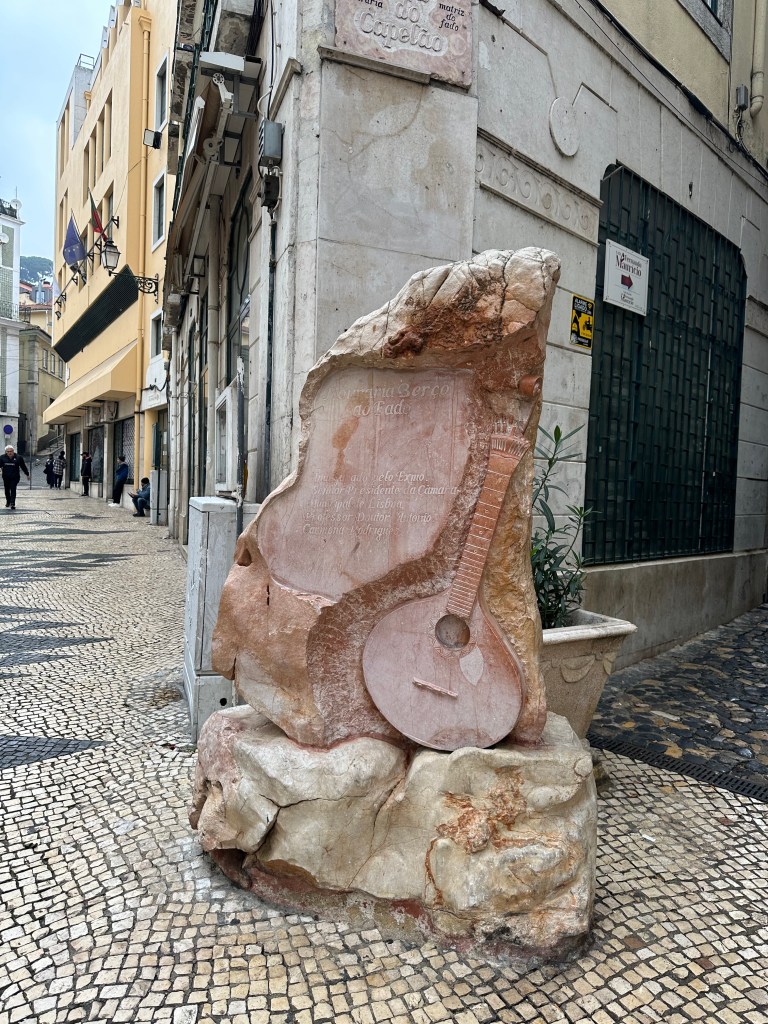
Fado – Portugal’s Old Soul
Fado is traditional Portuguese music that is said to emulate the Portuguese soul. The word “Fado” literally means “fate”. It sounds of eternal sadness and a longing for a time or land left behind. This type of music is so integral to the Portuguese history and experience that UNESCO recognizes it as part of the Intangible Cultural Heritage of Humanity.
Enjoying a life Fado performance is a must while in Lisbon. You can enjoy live Fado music one of two ways while in the city. First, you can make a reservation at a full-on Fado restaurant where you will be served a traditional Portuguese meal while enjoying about a 3-hour long Fado performance. We highly recommend you research Fado places in start late sometimes around 10 p.m. Another option is you can sip a glass of albariño and hear up-and-coming Fadistas. Sometimes you’ll be wandering the streets and happen upon an impromptu Fado Performance, like we did when we were searching for a dinner spot one night in the Baixa neighborhood. Although your best bet to catch a cozy, impromptu fado performances would be in Alfama. The Alfama district is where some of the best known Fado singers have come from.
Here is a great list of 11 Fado Houses for you to check out and learn more.
Get a feel for Fado music by learning a bit more about this unique music before your travels. One of the most famous Fado singers was Amália Rodrigues, known as the “Queen of Fado”. Listen to Amália sing Fado here, on YouTube. A current day, innovative Portuguese Fado and pop music singer is Carminho. Her first album Fado is hugely popular. Give Carminho a listen here.
Belém – Home to the Monuments
Situated by the water, about 7 miles west of central Lisbon, Belém is where Lisboetas go to escape the city. It has lots of museums as well as a magical riverfront promenade. In many ways, Belém is the birthplace of the Age of Discovery. Many famous maritime explorers set foot or set sail from Belém. For instance, Ferdinand Magellan, who was aboard the first ship that successfully went around the world embarked on his sea journey out of Belém. And even Christopher Columbus made a stop here on his way back to Spain from the Americas.
Three of the most iconic monuments/places in Lisbon – all closely connected to Portugal’s maritime past – can be found here, in the Belém neighborhood: Belém Tower – This former fortress is probably the most famous image of Lisbon. Situated along the Tagus riverfront this tower and surrounding area was a bustling port in the 16th century. The tower was a symbol of Portugal’s power at sea and at one point the tower even served as a prison. It is a UNESCO World Heritage site and free to visit but to enter and explore inside the tower, it will cost you 6 Euros. This is a popular place to enjoy a breathtaking sunset and it considered by most to be a must-see destination in Lisbon.

Monument to the Discoveries or Pradrao dos Descobrimentos– This monument, inaugurated relatively recently in 1960, pays tribute to Portugal’s regal maritime past and its role in the Age of Discovery. One of the coolest aspects of this monument is the fact that it stands on one of the most popular departure points during the Age of Discovery!

At the front of this monument, you will find a standing statue of Prince Henry, the Navigator and son of King John I. Prince Henry was known as the primary initiator of the Age of Discovery, which began in 1415 with the conquest of Ceuta, a Muslim port on the North African coast across the Straits of Gibraltar. In fact, this monument was built to mark the 500th anniversary of the death of Henry.
There is a fee to enter the monument but inside you will enjoy a great view of the Tagus River and can learn a ton about Portuguese sailors and mapmakers of the past.
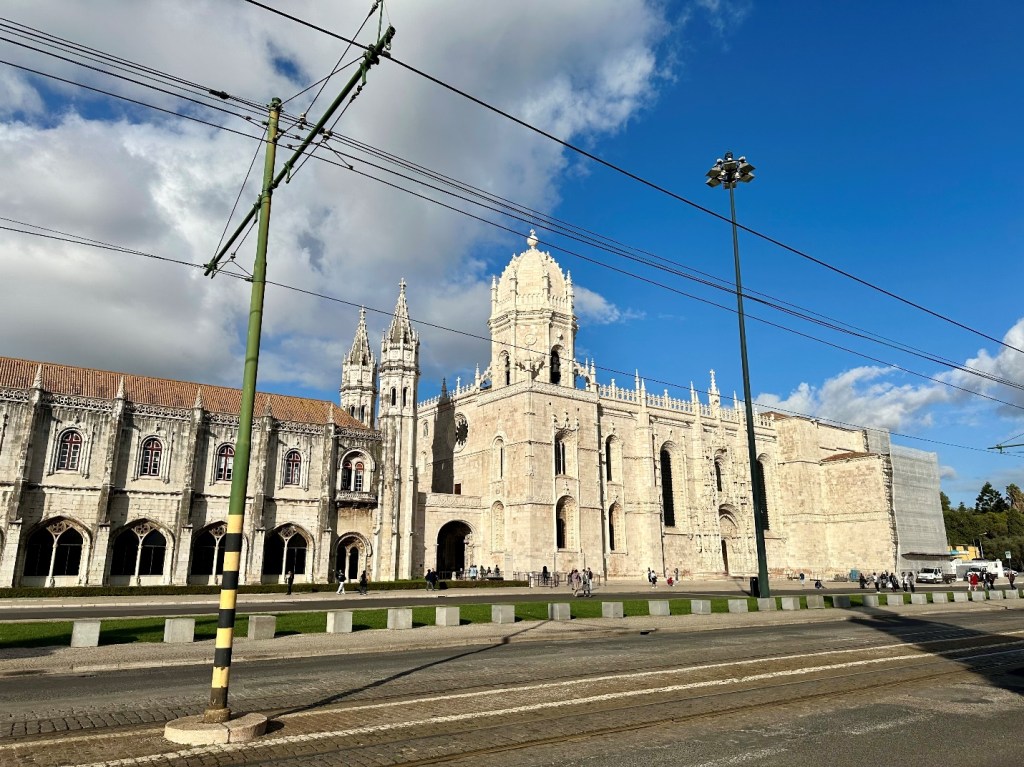
Jeronimos Monastery – This elaborate Monastery is a UNESCO World Heritage Site that pays homage to Portugal’s riches and expansion during the Age of Discovery. The building’s exterior is designed to emphasis the empire’s wealth during this time. Most of its construction was funded by taxes that were charged on the import of spices, stones, and gold. Inside you will find many maritime motifs throughout the building and the tombs of ancient explorers like Vasco da Gama a 19th century navigator. You’ll also find lots of azulejos or homemade, glazed tiles which the city is quite famous for. The decorative tiles can be found all over the city and were brought to Portugal in the 8th century by the Moors. To learn more about azulejos and the museum dedicated to this art form, check out our blog post The Best Museum in Lisbon for People who Hate Museums.
Tourists and locals alike say the Jeronimos Monastery is a must-see while in Lisbon.
Getting to Belem from Lisbon’s city center can easily be achieved by public metro or Uber. However, if you are looking to explore this neighborhood with a guide, you might want to consider this private tour option. You can customize your itinerary to include a mix of top sites across multiple neighborhoods in Lisbon to ensure you get to see and experience precisely what you would like to!
Pastéis de Nata – Bite into History
Who can resist those creamy custard tarts? Answer: Not a soul.

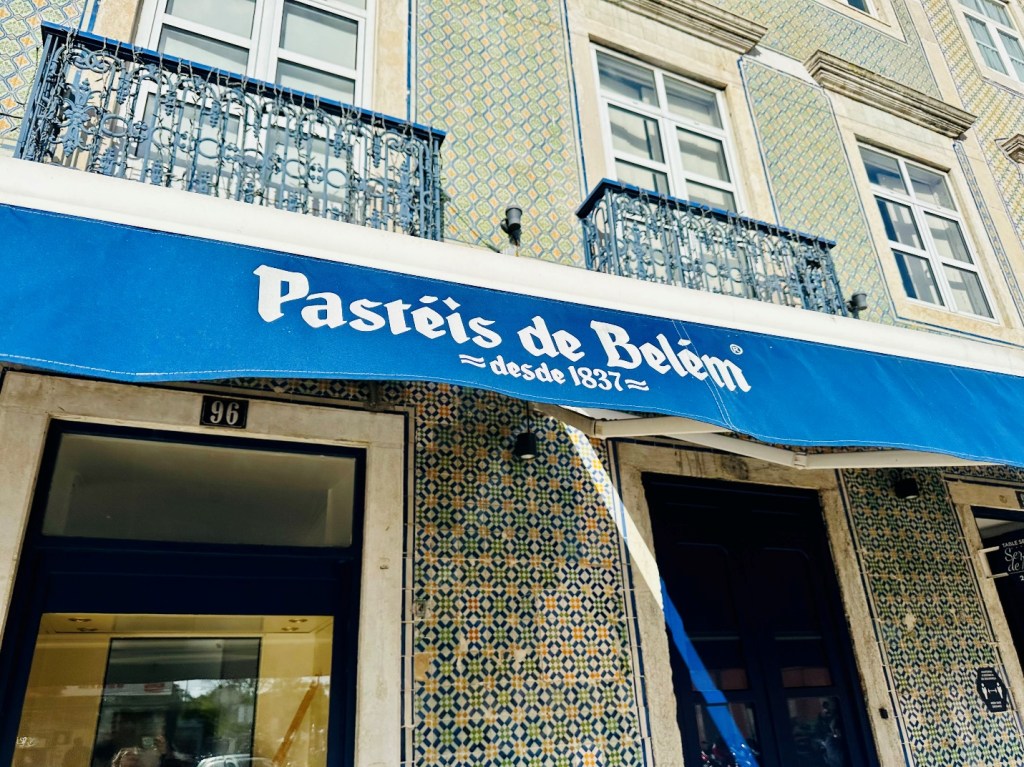
We ate these everyday while wandering the streets of Lisbon- they are ubiquitous in the city and a staple dish. This Portuguese egg tart pastry is sweet with an egg-yolky custard baked inside a flaky pastry shell and sprinkled with cinnamon. It was invented in Belémby the Jeronimos monks. The monks would give leftover yolks to bakeries to make the tarts after they used the egg whites to starch their robes.
The first and most famous Portuguese tart café and factory in all of Lisbon is Pastéis de Belém. You can see the tarts being made before your eyes and if you want to sit and stay awhile you can try to find an open table among the 250 tables located inside. Or you can order the tarts to go at the counter. Any long queue you may face is worth waiting in for a trip to Lisbon just would not be complete without a bite into one of these crispy, flakey tarts!
Sardines – Savor the Moment

Portuguese cuisine varies by region and thanks to its location along the Atlantic Ocean, fresh seafood and vegetables tend to be quite common. While the Portuguese diet is heavy on fish there is one dish, they favor more than others – the sardine. Savory sardines caught fresh and grilled on an open-aired barbecue served with potatoes and salad is the best way to enjoy this fan favorite. Another popular way barbecued sardines are served is alongside cataplana which is a tomato-based seafood stew. Sardines are a popular local ingredient that you will likely see on every menu you take a gander at. You’ll also likely pass by a few storefronts reading “The Fantastic World of Portuguese Sardines”. This shop is like a circus but it’s main premise is to keep this Portuguese tradition and delicacy alive. There is a big one of these shops close to the Elevator de Santa Justa in the Baixa neighborhood. It sells all kinds of canned sardines which honestly make for a fun souvenir! And if you are a vegetarian, you can always bite into a chocolate sardine which can be found in many tourist shops across the city.

Lisbon is a modern metropolis but with its roots firmly planted in its maritime past. While it moves forward in cutting-edge ways it too remains bound by its geography and place along the sea. Travels to Lisbon can take you to many places and corners of this magical city but, some of the most iconic aspects – it’s music, monuments and meals are truly unmissable.
We hope one day you get to stand beneath Lisbon’s monuments and monasteries, bite into one of their famous creamy tarts and feel your spine-tingle while listening to Fado music performed live.
Happy Travels!
– Justin and Alyssa


You’re right … no one can resist pastéis de nata! Thanks for all the lovely photos – I’ve seen so many places we’ve visited as well.
We actually found pasteis de nata in our local grocery store over the weekend and were very excited about it! Glad you recognized so many sites you’ve previously visited in the blog. Lot’s of top Lisbon must-see locations for sure!
So interesting!
Thanks a lot for sharing