Disclaimer: Lisbon, like any metropolitan city, is always changing. All times, prices, and other details shared in the following post were accurate at the time of our visit. As always, we highly recommend you check out the place online or give them a call to confirm details prior to your visit.
One of the unexpected things we quickly discovered on our recent travels around Portugal is that Lisbon is home to an unbelievable number of museums. Scattered in all parts of the city, each museum is incredibly unique; allowing you to deeply dive into distinct aspects of Portugal’s cultural heritage. You can learn everything you’d ever wanted to know about the horse-drawn carriage at the National Coach Museum or the achingly beautiful sounds of Fado, one of Portugal’s cultural legacies, at the Museo do Fado. But perhaps the best museum in Lisbon especially for people who hate museums is the Museu Nacional do Azulejo or the National Tile Museum. We think it’s the ONE museum in Lisbon you can’t miss. Read on to learn more about museum highlights, what you will see and what you need to know before your visit.
What is an Azulejo?
An Azulejo is essentially a hand-painted, glazed tile. These tiles can be found everywhere in the streets of Lisbon – especially on the facades of buildings and along walls at many popular miraduros or viewpoints. These tiles played a very practical purpose in the construction of the city for they helped to repel rain and humidity which prevented water and structural damage. The style and look of Azulejos have changed through time – all of which you an observe at the Museu Nacional do Azulejo. But the most classic or traditional Portuguese Azulejo is the geometric, blue and white painted tiles.
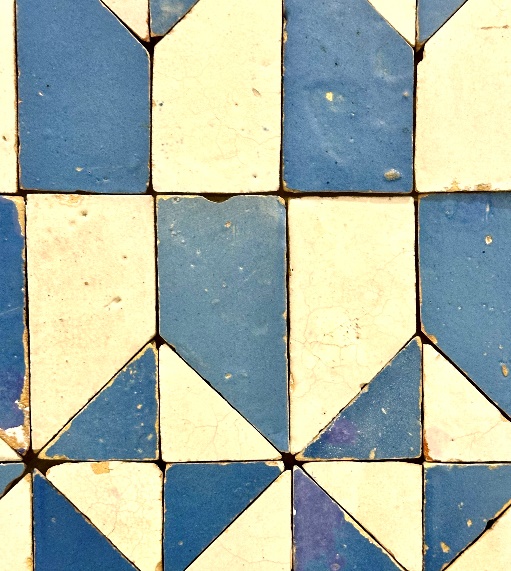

What You Will See at the Museum
Delve into a unique aspect of Portugal’s history and culture by perusing over 300 ornate titles. The tiles are displayed more or less in chronological order by floor which provides visitors with a visually stunning look at how this tradition changed over time and became embedded into the fabric of Portuguese society. Spoiler alert! A main driver of the azulejos in Portugal was the church.
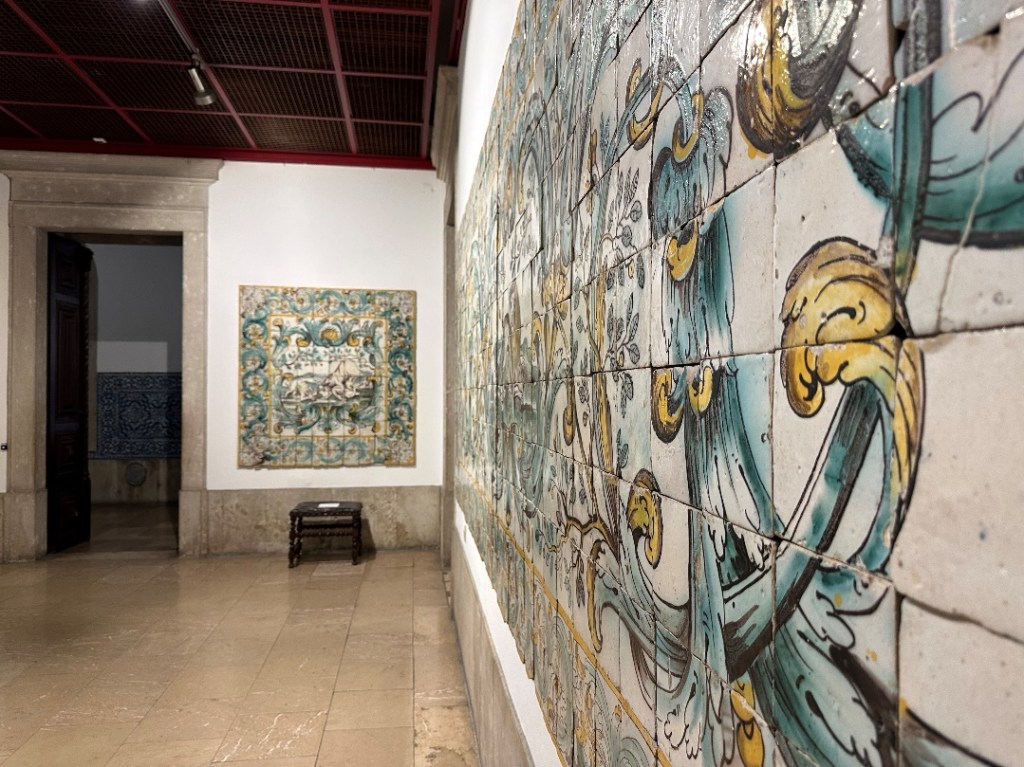
You’ll find a gorgeous courtyard patio on the first floor with stairs in the back which lead you up to the second level. The entire courtyard space is stunning – between the yellow, white, and blue tiles and decorative architecture, be prepared to take a ton of photos in this space.
On the top floor you will find the 118-foot-long Panorama of Lisbon made in 1730. It is made up of countless blue and white glazed tiles and depicts the city of Lisbon and its waterfront. It is said to be the country’s longest azulejo piece in existence.

Not only can you peruse countless historical treasures, you also will get the chance to roam a 16th-century monastery with a spectacular covenant church and chapel (surprise!) We did not know about these features before our visit and when we came upon them while roaming the museum … our jaws dropped. The chapel is ornate and grandiose with gilt baroque decoration and azulejo works of St. Anthony. It was humbling to be standing there knowing you on once-sacred grounds.

Where is Museu Nacional do Azulejo?
Some say this museum is off the beaten path, and while it is outside of the popular Alfama neighborhood or downtown Baixa area, it is still within walking distance of the city.
- Address: R. Me. Deus 4, 1900-312 Lisboa, Portugal
- Museum on GoogleMaps

We walked to the museum from the heart of the Alfama district and it took us about 40 minutes to reach the museum. It was a lovey walk and the route we took allowed us a nice, mid-point stop at the popular Feria de Ladra or “Thieves Market” is the biggest and most iconic Flea Market in Lisbon. It is held every Tuesday and Saturday in Campo de Santa Clara. You can find azulejos here!

Things to Know Before You Go
Cost: Tickets can be purchased upon arrival. A “normal” ticket admission cost 8 Euro (16 Euros for the both of us) and grants you access to the full museum.
Time: You can easily spend one to three hours here especially if you use the QR Code to access the self-guided tour on your smartphone. The duration you stay also will likely depend on how busy it is on the day you visit. You may have to wait to get up close enough to read some of the informative panels if you happen to visit on a crowded day.
Café: There is a lovely café across from the main entrance with indoor seating and a lush garden patio where you can enjoy an espresso and pastel de nata or even a glass of wine and a dish of salted cod with cornbread. Both Euros and credit cards are accepted at the café. An interesting feature of the café is it is decorated with 18th-century tiles.
Gift Shop: There is a small gift shop right across from the main admission gate. If you want to bring a tile or ceramic object home then it’s worth a quick stop. But there are many other places to find tiles around Lisbon.
WiFi: There is no WiFi in the museum. While the café menu on stand by the main entrance to the café claimed to have WiFi we were never able to access it. This is not a big deal if you have an international phone plan or plan to continue walking after your visit but we planned to use the museum WiFi to access Uber for a ride back to the city. Needless to say, our plan backfired. Thankfully we found a café nearby where we were able to have a drink, watch a local futbol match and use complimentary WiFi.
Washrooms: There are washrooms available past the main entrance, near the café. Maybe three stalls in the women’s room and even during the shoulder season there was a line.
When to visit: We explored this museum on our first day in Lisbon which helped us gain a deeper understanding for this part of Portuguese culture. Also, we were able to have a greater appreciation for the azulejos we saw all over the city for the remainder of our trip.
We know museums aren’t for everyone, but the Museu Nacional do Azulejo was worth it. Its collections are eye-catching and housed in an historical place. Plus, you’ll see a side of Lisbon less explored by tourists!
We hope you enjoy your visit to this specialty museum and find it as enjoyable as we did.
~Justin + Alyssa


Oh we loved it too! We spent our honeymoon in Portugal years ago. Arrived to tile museum in one of those tuk tuk vehicles, because there was a huge queue for the tram
We spent our babymoon in Lisbon and somehow never managed to hop aboard one of those tuk tuks that are all over the city. Not a corner of that city those tuk tuks don’t go these days.